Custom T-shirts & Signs, Fast & Free Shipping, and All-Inclusive Pricing

0

A banner that looks great indoors can become a problem the first time a coastal wind picks up, rain rolls through, or a parking-lot installation stays up longer than planned. For the best banner materials for outdoors, the right choice is not simply the thickest option. It depends on where it will hang, how much wind it will face, how long it needs to last, and how closely people need to read it.

For a grand opening, school fundraiser, construction notice, sports event, or storefront promotion, material selection affects more than appearance. It determines whether your banner stays readable, hangs cleanly, and holds up through the event without tearing at the corners or fading before the job is done.

The Best Banner Materials for Outdoors at a Glance

Most outdoor banner projects come down to three practical choices: solid vinyl, mesh vinyl, and fabric designed for outdoor display. Each has a place, and each has a trade-off.

Solid vinyl is the dependable all-around choice for most short- and medium-term outdoor banners. It delivers strong color, clear text, and a smooth printing surface. Mesh vinyl is built for windy locations because its small perforations let air pass through. Outdoor-rated fabric can create a more polished, premium look, but it is usually better suited to protected areas or uses where visual presentation matters more than long-term weather exposure.

The best material is the one that fits the actual installation conditions. A banner over a storefront entrance has different needs than one stretched across a fence line or mounted at a busy athletic field.

Solid Vinyl: The Standard for Most Outdoor Banners

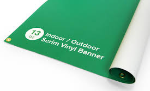
For many businesses, schools, and local organizations, solid vinyl is the starting point for good reason. It is durable, economical, easy to print, and available in weights that work well for temporary outdoor promotions. A standard 13-ounce vinyl banner is a common choice for sales, events, directional messaging, sponsor displays, and seasonal campaigns.

Solid vinyl produces rich colors and sharp graphics. If your banner includes a logo, detailed artwork, photos, QR codes, or small text, the smooth surface helps those elements reproduce clearly. It is also a strong option when people will view the banner from nearby, such as outside a retail location, at a registration table, or along a school pickup area.

Its limitation is wind. Because solid vinyl does not allow air to pass through, a large banner can act like a sail. That does not mean it cannot be used outdoors. It means installation matters. Reinforced hems, properly placed grommets, secure attachment points, and enough tension all help reduce strain. For a banner exposed to frequent gusts, especially on a fence or open structure, mesh may be the smarter call.

Mesh Vinyl: Built for Windy, Open Locations

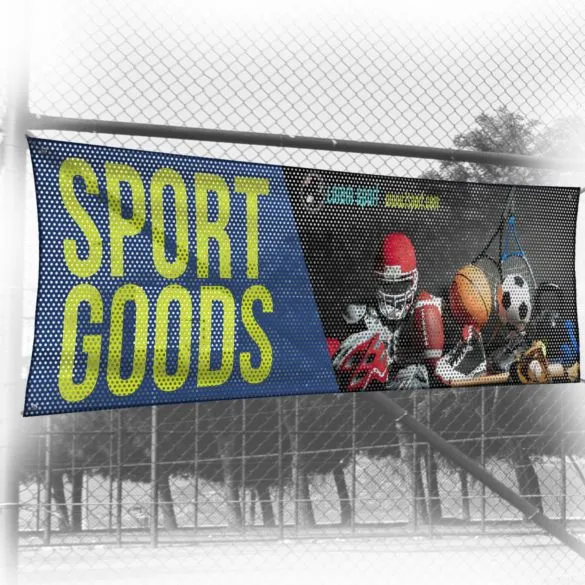
Mesh vinyl is often the best answer when wind is the biggest concern. Its perforated surface allows airflow to move through the banner instead of pushing hard against it. That reduces stress on the material, grommets, fence ties, and mounting hardware.

This makes mesh a practical choice for chain-link fences, outdoor sports complexes, construction sites, parking-lot barriers, and open-air event spaces. In coastal and inland Southern California, where banners may face regular afternoon winds or exposed conditions, mesh can prevent a short-term sign from becoming a replacement order.

The trade-off is print density. Because mesh has tiny holes, colors are not quite as solid or vivid as they are on standard vinyl. Fine details can also lose some clarity, especially when viewed up close. That is usually not a concern for a large fence banner with a bold logo, sponsor name, or simple event message. It can matter if your design relies on small type, delicate linework, or high-detail photography.

A good mesh banner design uses large lettering, high contrast, and simple graphics. Think of it as signage meant to be read from a distance, not a brochure on a wall.

Outdoor Fabric: Best When Presentation Comes First

Fabric banners bring a softer, more upscale look than vinyl. They can work well for outdoor markets, ceremonies, pop-up activations, hospitality events, and branded displays under tents or covered patios. Fabric is also less likely to reflect light, which can help when photos and video are part of the event.

That said, fabric is not automatically the best choice for every outdoor use. Some fabrics are made specifically for outdoor conditions, while others are better for indoor backdrops or short, protected outdoor displays. Rain, direct sun, repeated handling, and strong wind can shorten the useful life of a fabric banner if it is not intended for that environment.

If you need a polished look for a one-day event in a sheltered setting, fabric may be a strong fit. If you need a banner to stay on a fence through weeks of weather, vinyl or mesh is generally the more dependable route.

Match the Material to the Banner’s Job

Before choosing a material, start with the installation rather than the artwork. Ask where the banner will be mounted, whether wind can move freely around it, and how long it needs to remain in place.

A storefront promotion hung for two weeks may do very well with solid vinyl. A baseball field sponsor banner that stays up all season may benefit from mesh if the fence is exposed. A school open house banner under a covered walkway can prioritize print quality and appearance. A construction-site banner may need durable vinyl, a simple high-contrast layout, and finishing that supports frequent outdoor exposure.

Viewing distance should guide your design decisions, too. A banner seen from across a parking lot needs a short message and oversized text. A banner placed near an entrance can include more information, but only if the layout remains easy to scan. Material cannot fix a design that is too crowded.

Finishing Matters as Much as the Banner Material

A well-printed outdoor banner still needs the right finishing details. Hems strengthen the edges, which helps prevent tearing around the grommets. Grommets provide reinforced holes for hanging, but they need to be positioned for the installation method. A banner fastened only at the corners is more likely to flap, sag, and fail than one secured at regular intervals.

For fence installations, use enough attachment points to distribute tension evenly. Avoid pulling the banner drum-tight, particularly in windy areas. A little controlled flexibility is better than concentrating all the force on a few grommets. Bungee cords can also help absorb movement compared with rigid ties, depending on the setup.

If the banner will hang between posts or across a roadway, discuss the mounting plan before it is printed. Large-format projects may need pole pockets, reinforced corners, wind slits, or other finishing options based on the structure and local requirements.

Design for Sun, Rain, and Real-World Reading

Outdoor banners have to compete with glare, traffic, distance, and distractions. High contrast is more valuable than a complicated color palette. Dark text on a light background, or light text on a dark background, gives readers the best chance of catching your message quickly.

Keep the most important information large: your business name, event title, date, location, or call to action. If a logo is central to the banner, provide a clean, high-resolution file whenever possible. Low-resolution images may look acceptable on a screen but become noticeably soft when enlarged for print.

For longer outdoor use, expect some degree of weathering over time. Direct sunlight can eventually affect color, and no banner material is permanent in every condition. Planning the expected display period honestly helps you choose a material and budget that make sense.

A Practical Choice for Your Next Banner

Choose solid vinyl when you want sharp, vivid printing for a typical outdoor promotion with manageable wind exposure. Choose mesh vinyl when the banner will be large, fence-mounted, or exposed to regular wind. Choose outdoor-rated fabric when the setting is more protected and a premium, low-glare presentation is the priority.

If you are unsure, bring the installation details into the conversation early: banner size, location, mounting surface, expected display time, and artwork. A production partner can help match the material and finishing to the job before the banner reaches the site. That small step is often what turns a quick sign order into outdoor signage that performs exactly as planned.

Leave a Reply

Your email address will not be published. Required fields are marked *